Impact Reports
Seven in-depth impact reports – one for each location – produced by TU Delft’s PortCityFutures team. Each report provides a detailed qualitative and quantitative analysis of what happened in that pilot: what was designed, what was implemented, what changed and what the conditions are for long-term impact. Written for a research and policy audience but accessible to anyone who wants to go deep on a specific location.
Environmental Impact
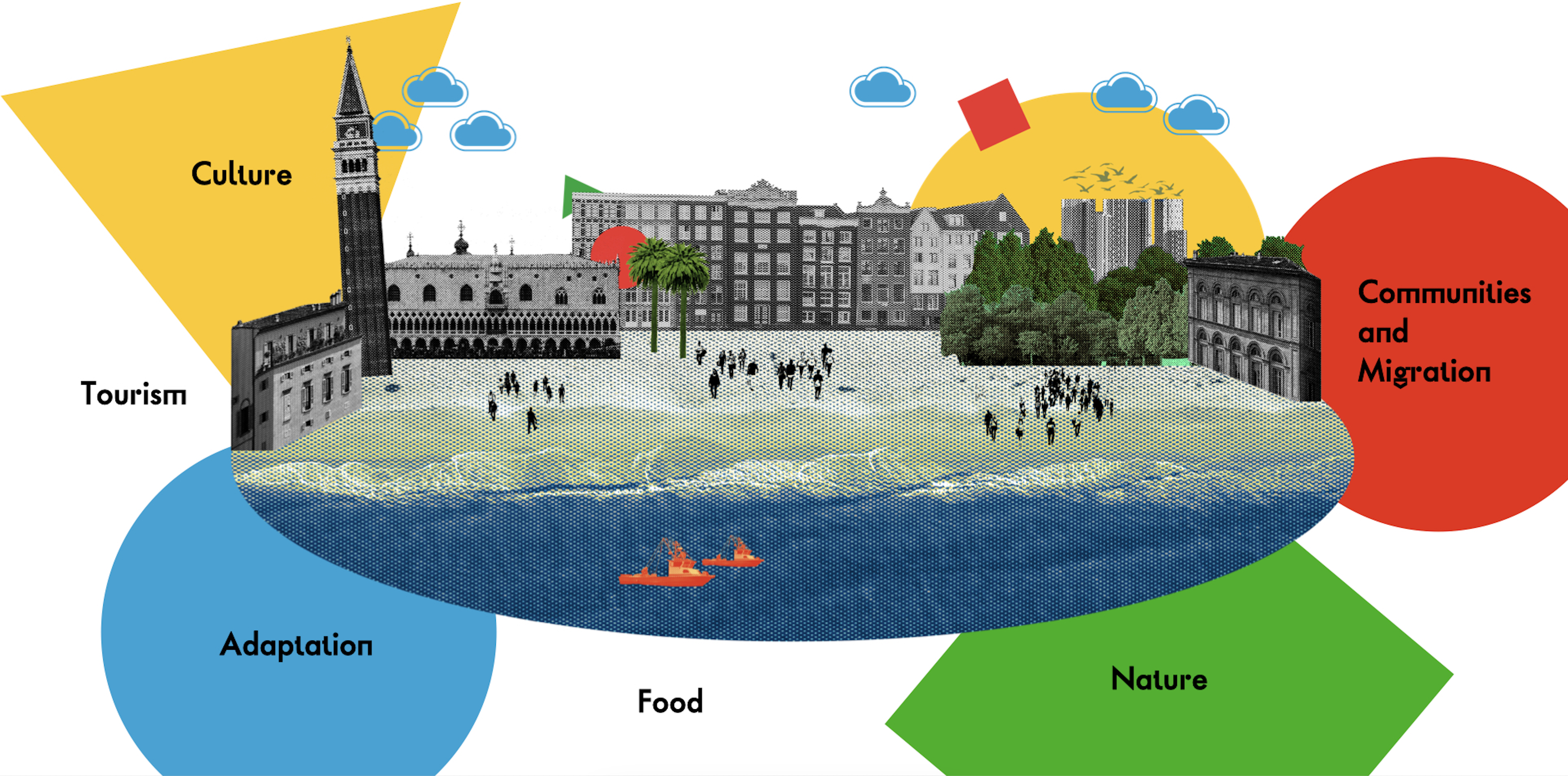
The environmental impacts of Bauhaus of the Seas Sails are real, but they are mostly early-stage – seeds planted rather than forests grown. That is honest. Three years is not long enough to reverse ecological degradation. It is long enough to change how people relate to the ecosystems around them and to demonstrate approaches that, if continued and scaled, could make a measurable difference.
Across all seven locations, participants gained new knowledge about marine biodiversity, coastal ecology and the interdependence between human and non-human life. In Malmö, that knowledge became something more tangible: citizens helped to build a reef and the reef is now home to blue mussels, algae, sea bristle worms and beaked tasselweed. Nature responded to an invitation.
The Zoöp methodology gave all seven pilots a shared framework for thinking about what it means to act regeneratively – not just reducing harm, but actively supporting the health of the ecosystems they were working with. Speakers for the Living ensured that ecological perspectives were present in every Sea Forum, every workshop, every design decision. In Genoa, the Speaker for the Living involved the local community in environmental observation – reporting species sightings, tracking changes – and found that participation increased as a result.
Material innovation contributed to environmental impact in more concrete ways. In Lisbon, bio-ceramic tiles made from oyster shells and seaweed-based binders demonstrated a circular production model that connects marine waste recovery with cultural heritage and design. In Hamburg, the fellowship programme deepened the practice of regenerative food producers and introduced their techniques to a new generation of culinary students. In Venice and Hamburg, digital platforms now preserve ecological knowledge – traditional recipes, fishing practices, the life of the lagoon – that would otherwise risk being lost.
In the Future Tidal Architectures workshops in Venice and the Delta, students were introduced to the spatial and design challenges of living with rising seas – developing adaptive, climate-conscious approaches to architecture and planning that they will carry into their professional lives.
Social Impact
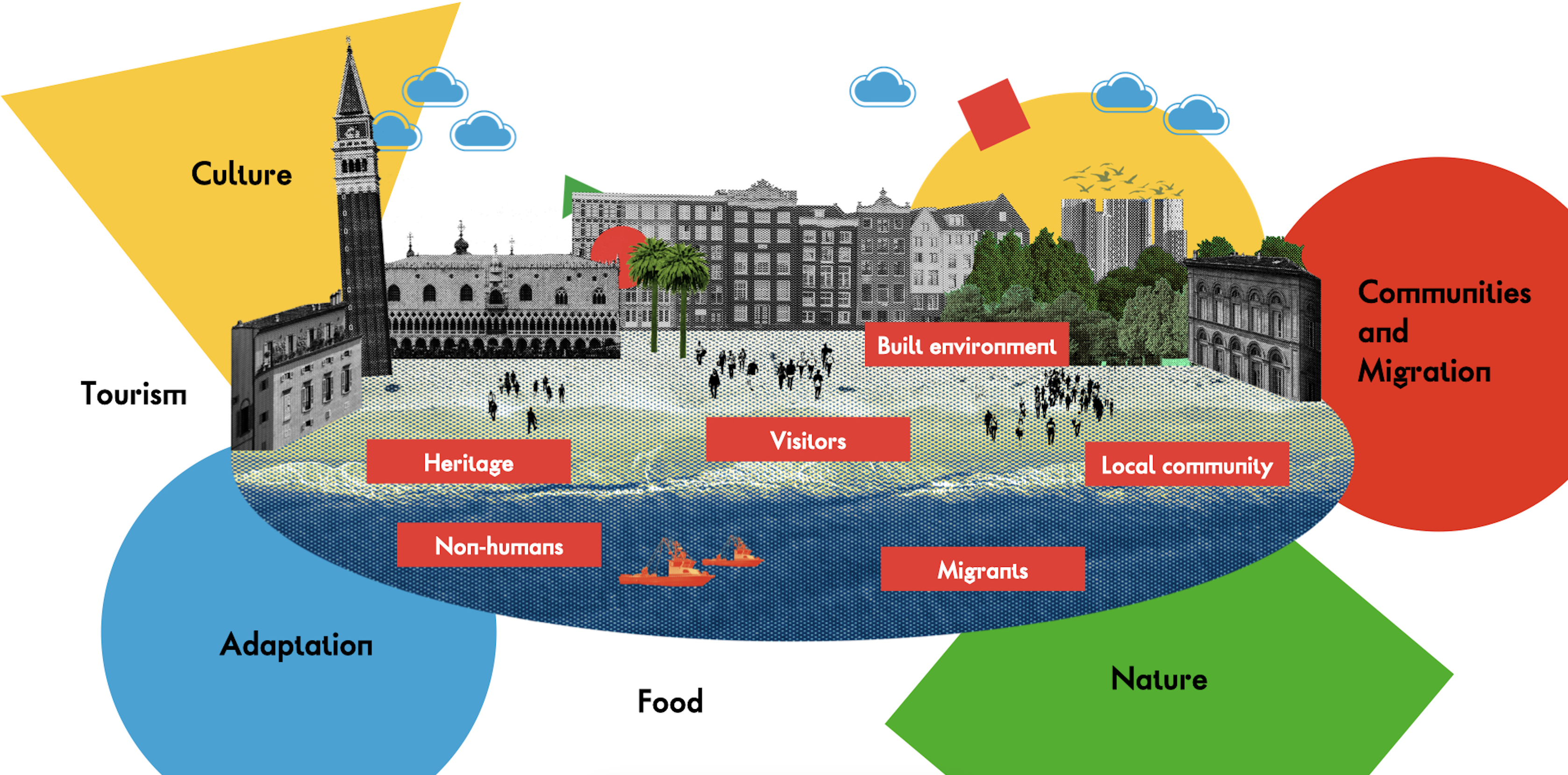
The social impacts of Bauhaus of the Seas Sails are perhaps the most varied and the hardest to summarise – because they happened differently in every place, with every community, in every conversation.
What the project did consistently, across all seven locations, was create spaces where different kinds of people could encounter each other and the natural world around them – and where something unexpected could happen as a result.
In Venice, more than 100 seniors were interviewed about their relationship with the lagoon. Their knowledge and memories shaped 27 digital prototypes designed by university students. The prototypes were evaluated by 200 seniors. The loop closed: experience informed design and design was tested against experience. Nobody was a passive participant.
In Hamburg, Green Michelin Star chefs sat alongside culinary school students from diverse backgrounds and taught them to ferment, to work with dual-purpose chickens, to think about where food comes from and what it costs the ecosystem to produce. In Malmö, Ocean Ambassadors reached 890 citizens – many of them people who had never engaged with a publicly funded cultural project before – and built a community that is now considering formalising as a cooperative. In Lisbon, children in a primary school made bio-ceramic tiles from oyster shells and learned that the estuary outside their city is full of materials with which to build.
The project was not always successful at reaching beyond the usual audiences of cultural institutions. Several pilots acknowledged this honestly. But the deliberate strategies that worked best – dedicated activities for specific groups, locally embedded Ocean Ambassadors, free and accessible events – produced real results and are documented in the replication materials for others to learn from.
Intergenerational dialogue was a consistent thread. Young people and older residents found themselves in the same rooms, around the same tables, on the same boats – and discovered that they had things to offer each other that no institution had previously helped them to share.
Economic Impact
The economic impacts of Bauhaus of the Seas Sails are modest in scale but promising in direction. The project was not designed to generate economic activity directly – but it created conditions in which economic possibilities began to emerge.
In Hamburg, the fellowship model produced measurable professional development for seven chefs and food producers, two of whom hold Green Michelin Stars. New techniques, new equipment, new recipes and new professional networks have strengthened their businesses and enhanced Hamburg’s reputation as a city at the frontier of regenerative gastronomy. The Summer Course – connecting fellows with culinary school students – represents a model of income diversification for creative practitioners that could be replicated in other contexts.
In Lisbon, the bio-ceramic tile initiative has the characteristics of a viable circular economy business: it connects marine waste (oyster shells) with a high-value cultural product (azulejo tiles), engages a community with skills transfer and addresses a genuine market interest in sustainable construction and eco-design. It is currently reliant on public funding. But its business model is visible and the skills are now being transferred in Marvila.
In Venice, the lagoon boat trips demonstrated a scalable eco-tourism model – one that activates underused cultural and natural assets, supports local operators and offers an alternative to the fast, extractive tourism that is hollowing out the historic city. In Genoa, the PAVIS AR application has the structure of a geo-localised experience platform that could be licensed to other cities for cultural tourism purposes.
In Malmö, the artist collective Landart – formed through the project – has already secured follow-up funding. The Ocean Ambassador community is exploring cooperative models. In the Delta, student scenarios for the Saeftinghe area have proposed salt-resistant crops, climate-resilient architecture and hybrid land-use models that are now entering regional planning discussions.
Across the project, students in Venice, Hamburg and the Delta built professional relationships, acquired new skills and identified career pathways that the project helped to open up. The economic value of that is diffuse and long-term – but it is real.
Scientific Impact
Bauhaus of the Seas Sails produced 27 scientific publications over its three-year lifetime – all open access, all in line with Horizon Europe’s FAIR principles. Fifteen of these were produced in the final period alone.
The publications appeared in journals including Design Issues, Futures, Trends in Biotechnology and Discover Sustainability and at major international conferences including ACM CHI and ACM DIS. They cover a range of topics that reflect the genuine interdisciplinarity of the project: co-design methodology, more-than-human governance, digital heritage, regenerative food systems, biocentric artificial intelligence, coastal cultural heritage and the microbiology of the Tagus estuary.
Several outputs are likely to have lasting influence on their fields. The paper on Zoöp Futures (Pedroso-Roussado et al., Futures, 2025) contributes a peer-reviewed theoretical framework for ecological cooperation between human and non-human actors. The paper on biocentric LLM-based decision-making (Félix et al., Discover Sustainability, 2025) is among the first peer-reviewed contributions to the emerging field of AI systems designed to represent non-human interests. The Digital Twin feasibility framework developed by IIT provides a methodology for assessing climate-induced deterioration of coastal cultural heritage that is applicable far beyond Venice.
TU Delft’s impact assessment methodology – developed specifically for Bauhaus of the Seas Sails because adequate tools did not exist – is now being integrated into professional education courses in The Hague and Rabat and is available for adaptation by other projects working in the space between culture, ecology and urban transformation.
The full publication list, with DOIs and open-access links, is available in Tools, Resources and Publications.
Governance and Policy Impact
Governance change is the slowest kind of change – and the most durable when it comes.
The most concrete governance outcome of Bauhaus of the Seas Sails is in Malmö, where the Sea Forum’s work culminated in a Zoöp memorandum of understanding signed by the municipality, local universities and civic associations. This is not a letter of intent. It is a formal agreement establishing a basis for continued collaboration around the South Wharf Basin and its ecology – and it includes the municipality’s commitment to integrate the nature-based reef into its plans for the area as a new public space.
In Oeiras and Venice, municipal partners have expressed commitment to continuing creative, participatory approaches that combine art, science, education and citizen engagement – with Bauhaus of the Seas Sails as an explicit reference point. In Genoa, the municipality is actively seeking funding to replicate the Inclusive Digital Storytelling process in other neighbourhoods. In the Delta, the Grenspark Groot Saeftinghe partnership has integrated storytelling and scenario-making into its post-2026 plans.
Three EU coastal cities and regions beyond the original consortium have formally expressed interest in replicating Bauhaus of the Seas Sails results. A conversation with the EU Delegation to Brazil about replication in that country took place in May 2025.
At the European level, Bauhaus of the Seas Sails participated in NEB Cluster meetings, the United Nations Ocean Conference in Nice, the European Week of Regions and Cities in Brussels and events at the Joint Research Centre and CINEA – positioning its methods and results within the policy conversations that will shape the next generation of European coastal investment.
Pilot Impact Reports
Seven in-depth impact reports – one for each location – produced by TU Delft’s PortCityFutures team. Each report provides a detailed qualitative and quantitative analysis of what happened in that pilot: what was designed, what was implemented, what changed and what the conditions are for long-term impact. Written for a research and policy audience but accessible to anyone who wants to go deep on a specific location.
All seven reports are published open access on portcityfutures.nl.
— Lisbon Impact Report
— Oeiras Impact Report
— Genoa Impact Report
— Venice Impact Report
— Malmö Impact Report
— Delta Impact Report
— Hamburg Impact Report